More Blog Posts
Villa Digital
Engineering AG
Tittwiesenstrasse 21
7000 Chur
Alte Landstrasse 248
8708 Männedorf
Zugerstrasse 53
6340 Baar
Neugasse 12
9000 St. Gallen
360° Virtual Tours for Buildings and Site Surveys
360° Tour – When a Building Becomes Digitally Accessible
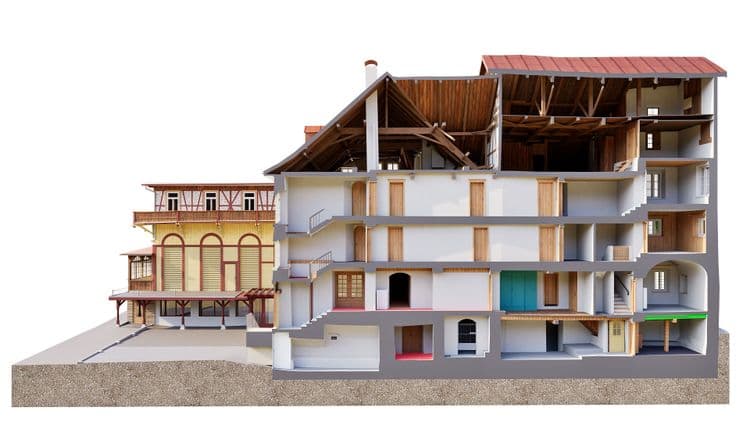
We typically survey abuildingonce. However, the information gathered in the process can offer far more than traditional floor plans, cross-sections, or 3D models.
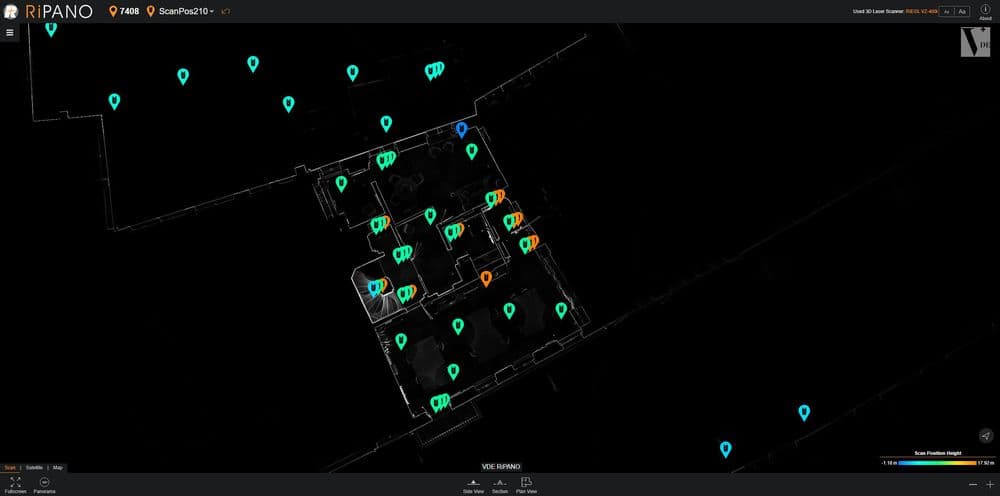
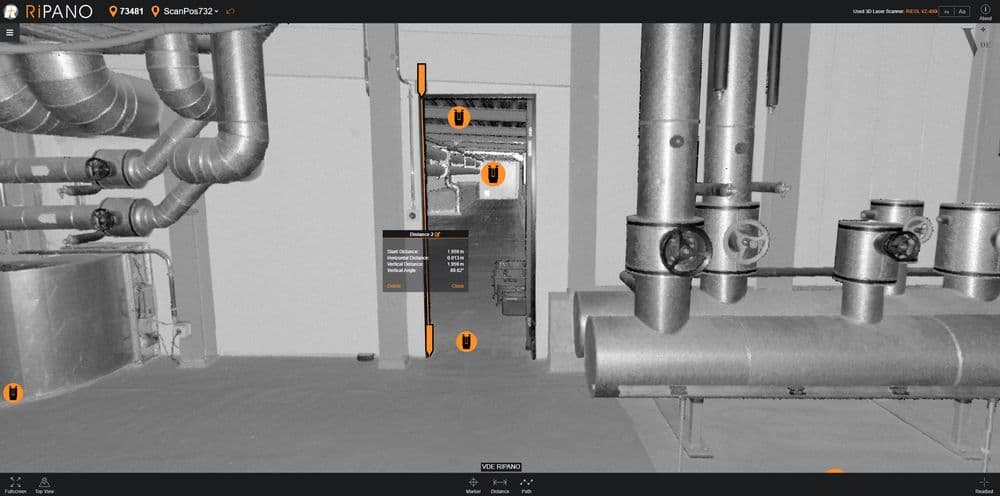
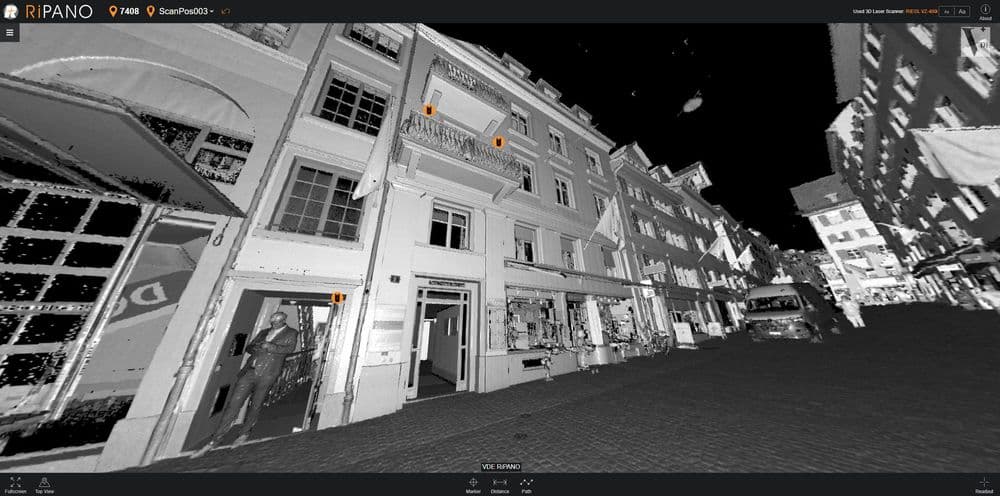
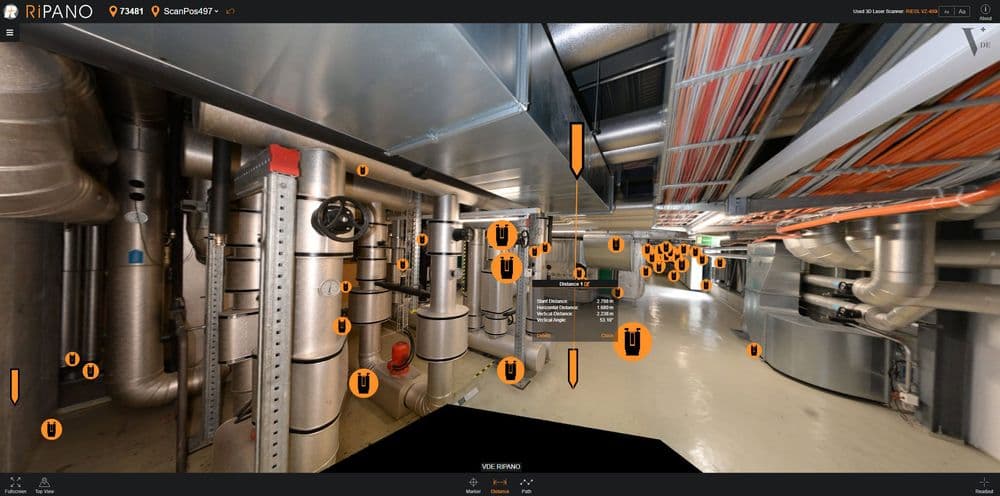
A 360° tour makes a building digitally accessible. Rooms, hallways, technical areas, and entire properties can later be viewed directly on a screen—regardless of where the people involved happen to be. It’s almost as if you were standing there in person again.
Why this is particularly valuable for existing buildings
During the planning phase of renovations and retrofits, questions about the existing building inevitably arise. Where exactly did that pipe run? What did the connection on that wall look like? Was there a radiator or a mechanical system there? Without digital documentation, this means sifting through plans, searching for photos, calling someone on-site—or, in the worst case, making another trip there. With a 360° tour, the relevant area can often be checked on screen within a few seconds.
Surveying and Visual Documentation Combined
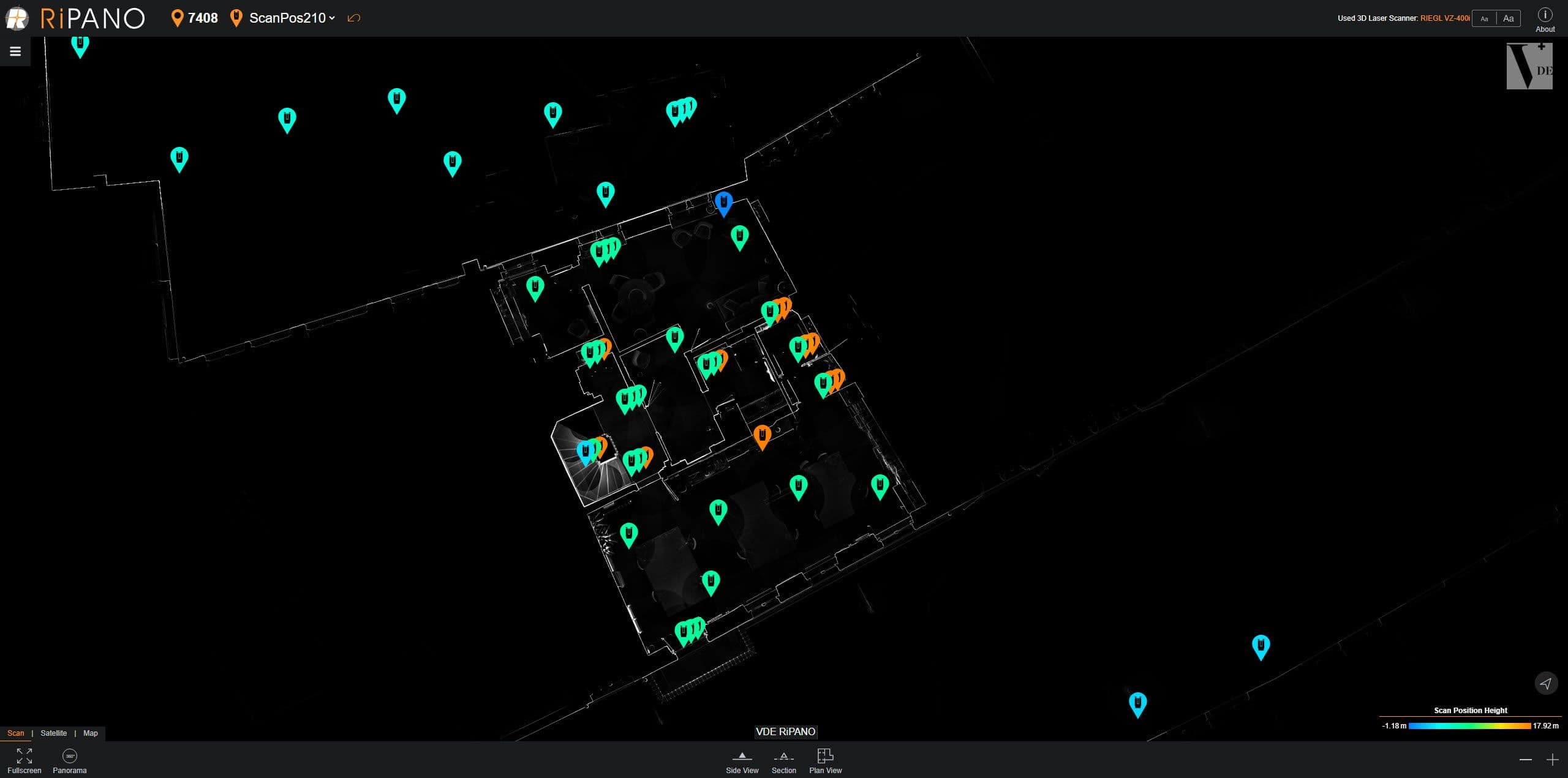
At VDE Villa Digital Engineering AG, we don’t view the 360° tour as a replacement for precise building surveying, but rather as a complement to it. A 3D laser scan provides geometrically precise measurement data. A 360° image provides visual information. The point cloud answers: How big is something, and where is it located? The 360° image also answers: What does it actually look like there? Combined, this results in particularly valuable documentation of the existing structure.
A digital memory of the building
During a survey, many details become visible that will later be altered or disappear entirely. Walls are opened up, installations are removed, ceilings are closed off, and wiring is hidden behind new cladding. A 360° tour captures these conditions and makes them available for the long term. This helps not only during planning but also during operation, maintenance, or future renovations.
Fewer Additional Site Visits—A Better Overview for Everyone
On larger projects, many people often work with the same as-built data—not everyone was present during the original survey. A digital tour allows situations to be reviewed retrospectively, rather than having to revisit the site each time. This creates a shared visual foundation for everyone, especially for public properties such as school buildings, administrative buildings, or maintenance facilities, where many different stakeholders are involved.
More Than Just Pretty Pictures
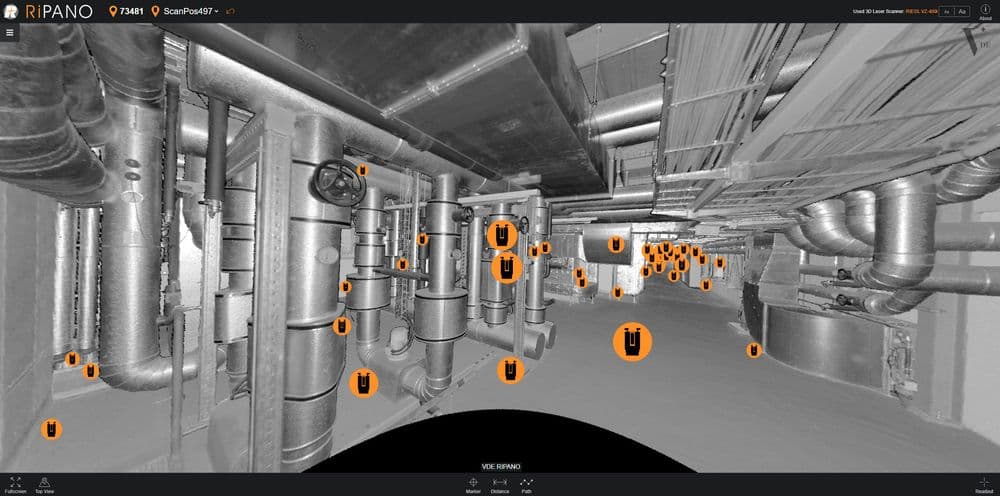
360° tours are best known from real estate marketing. Our approach is different: The focus isn’t on presenting a space in the most attractive light possible, but on documenting the actual condition of the property. That’s why basements, utility rooms, attics, and utility areas are particularly valuable to us—experience shows that these are the areas where the most questions arise during the planning phase.
Walking through the building again, even years later
The greatest benefit of a 360° tour may not become apparent immediately after it’s recorded, but rather months or years later. A project team member can no longer recall a specific situation in detail. A new specialist planner joins the project. An area has been remodeled in the meantime. Once something has been thoroughly documented, there’s no need to reconstruct it from memory.
Quick Q&A
What is a 360° tour?
A sequence of interconnected panoramic images of a building. You move digitally through the rooms and freely choose your viewing direction.
Does this replace building surveying?
No. The tour provides visual documentation; for precise geometry, laser scanning, point clouds, and as-built plans remain the standard.
Can a tour be combined with laser scanning?
Yes, and this combination is precisely what makes it most valuable: precise measurement data from the scan, and visual condition information from the 360° images.
Will the virtual tour still be usable later on?
Yes—that’s one of the biggest advantages. Project stakeholders can still refer back to the documented condition even months or years later.
Does this require special software?
No. The viewer runs directly in the browser, without the need for any CAD or BIM software.
What types of buildings is this suitable for?
For virtually any existing building—especially complex renovations, public buildings, schools, industrial properties, or projects with many stakeholders.
Does VDE operate throughout Switzerland?
Yes. VDE creates 360° virtual tours and building documentation throughout Switzerland—as a standalone service or combined with 3D laser scanning and BIM models.