More Blog Posts
Villa Digital
Engineering AG
Tittwiesenstrasse 21
7000 Chur
Alte Landstrasse 248
8708 Männedorf
Zugerstrasse 53
6340 Baar
Neugasse 12
9000 St. Gallen
Digital heritage: Laufen Castle by the Rhine Falls
How modern laser scanning technology and scan-to-BIM processes help to precisely record a 1,200-year-old cultural monument in the Canton of Zurich and safeguard it for the future.
Location: Laufen-Uhwiesen ZH - Category: Monument surveying
High above the thundering Rhine Falls, on a rock in the canton of Zurich, Schloss Laufen has been enthroned for over a millennium. What visitors experience as an impressive cultural heritage site presents a special challenge for surveying experts - and an extraordinary opportunity to use state-of-the-art measuring technology in a place where history literally speaks from the walls.
The object: 1,200 years of history
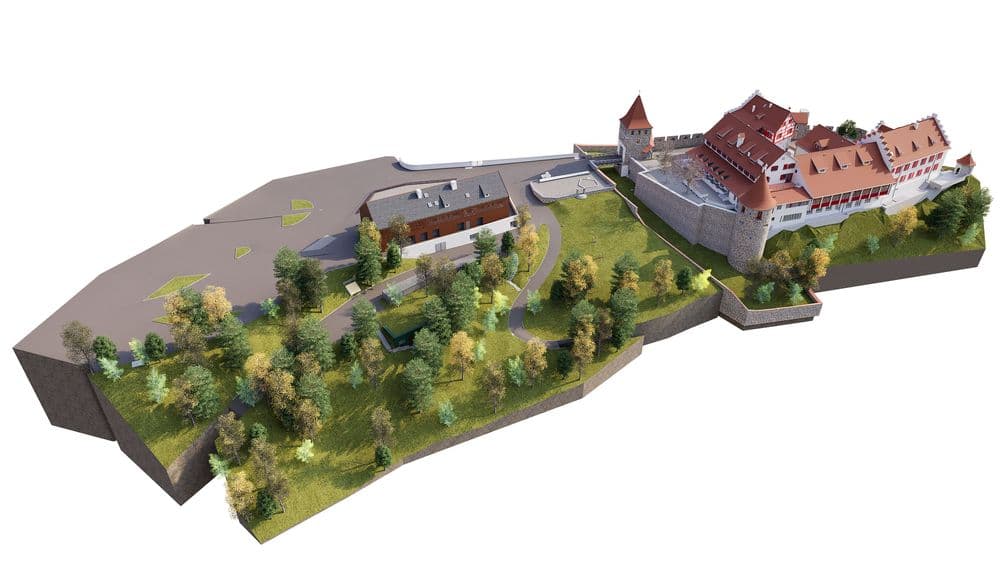
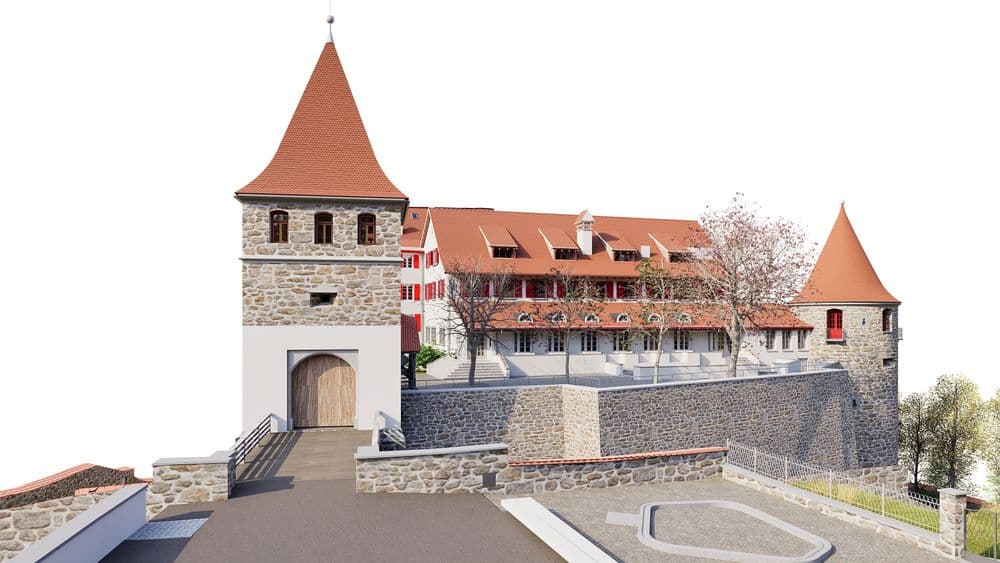
Schloss Laufen is part of the cultural heritage of the canton of Zurich and is one of the best-known historical sites in northern Switzerland. Its first documented mention dates back to the year 858. Since then, the massive walls have survived sieges, renovations and centuries - and today offer visitors from all over the world an incomparable view of the largest waterfall in Europe.
It is precisely these decades of conversions and adaptations that make the building so complex to survey: leaning walls, irregular room structures, historic vaults and missing or unreliable plan material are typical features of such properties. A traditional manual survey would take months and would hardly achieve the necessary accuracy.
Our approach: laser scanning & scan-to-BIM
For the monument survey of Schloss Laufen, we relied on a combined workflow of terrestrial 3D laser scanning and subsequent scan-to-BIM modeling. This method has proven to be particularly effective for historic buildings, as it provides both precise geometric data and a structured digital basis for future renovation and restoration projects.
1. field survey with 3D laser scanning
Terrestrial laser scanners were used to systematically record all the interiors, facades, vaults and the exterior of the castle. Several scanning locations ensured a seamless, overlapping point cloud without shadow areas.
2. registration & point cloud processing
The individual scans were merged into a coherent overall point cloud. The result: a complete, millimetre-accurate digital image of the building stock - the basis for all further evaluations.
3. scan-to-BIM modeling
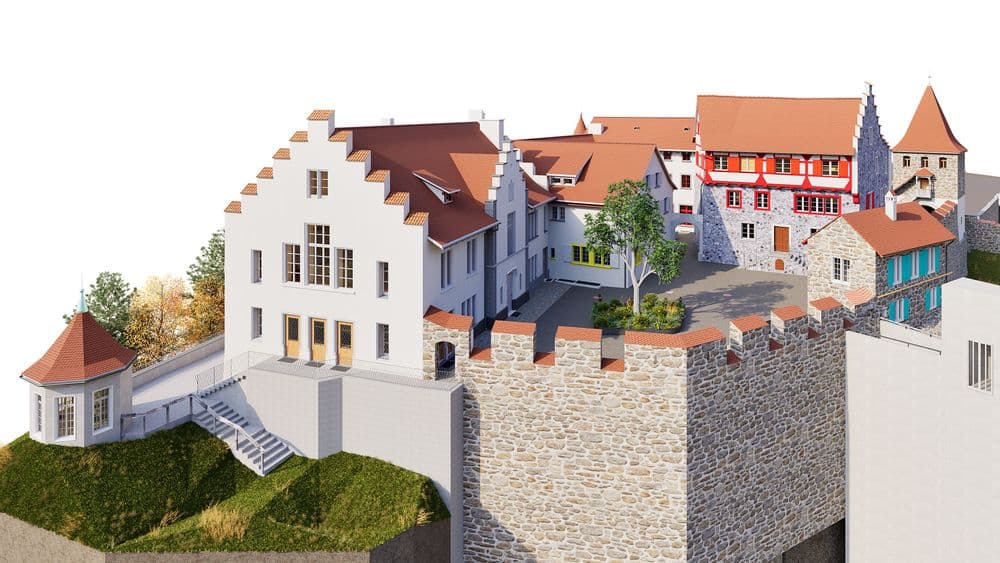
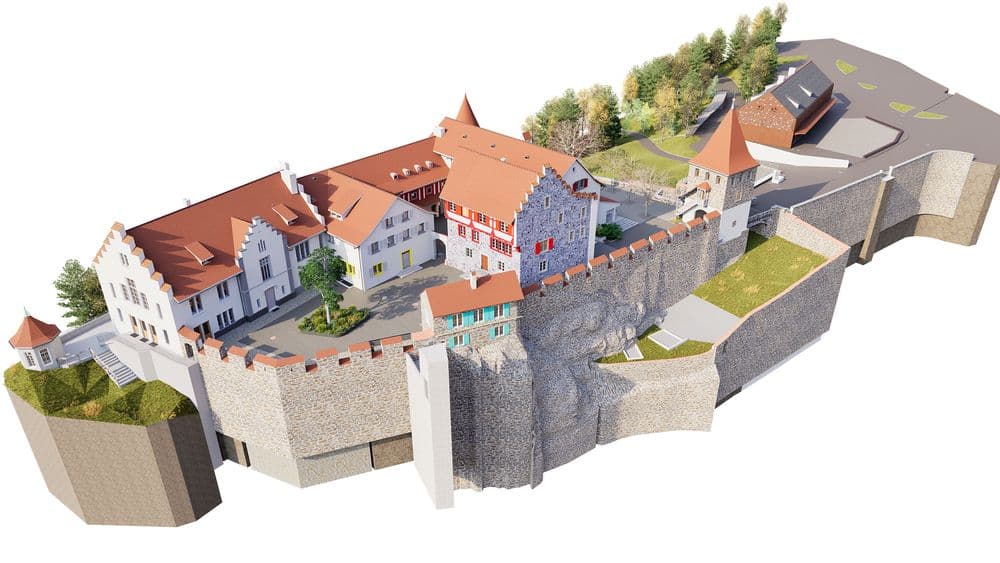
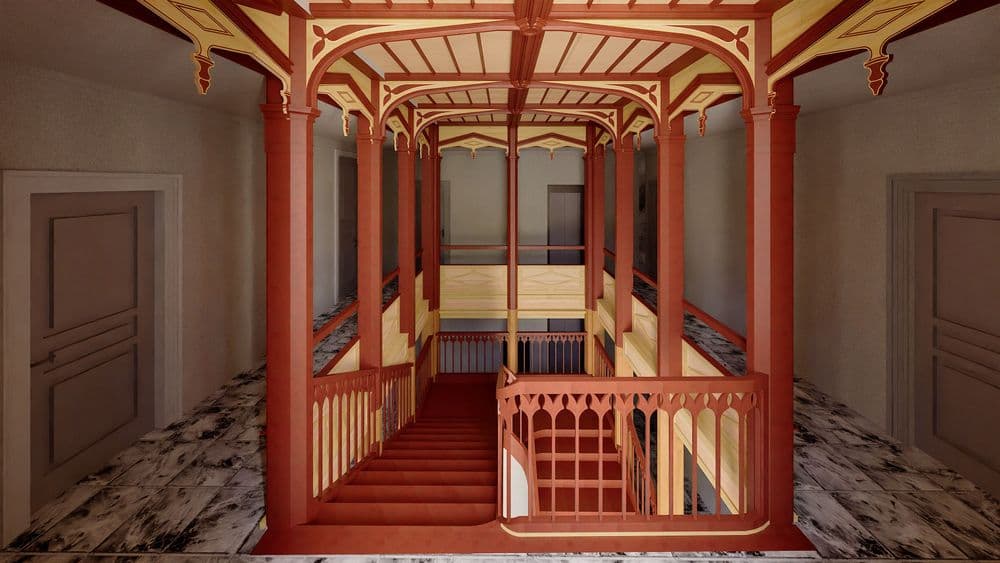
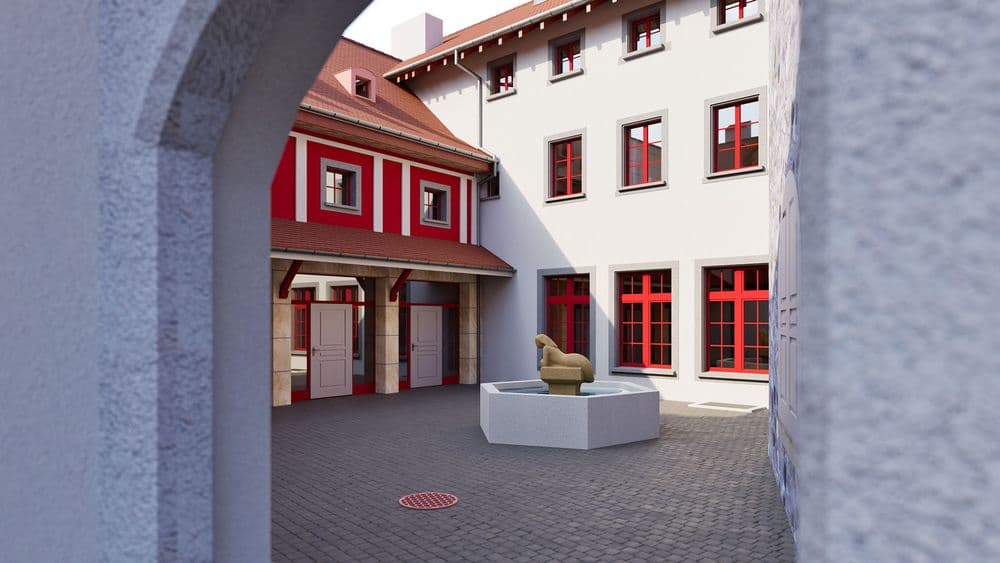
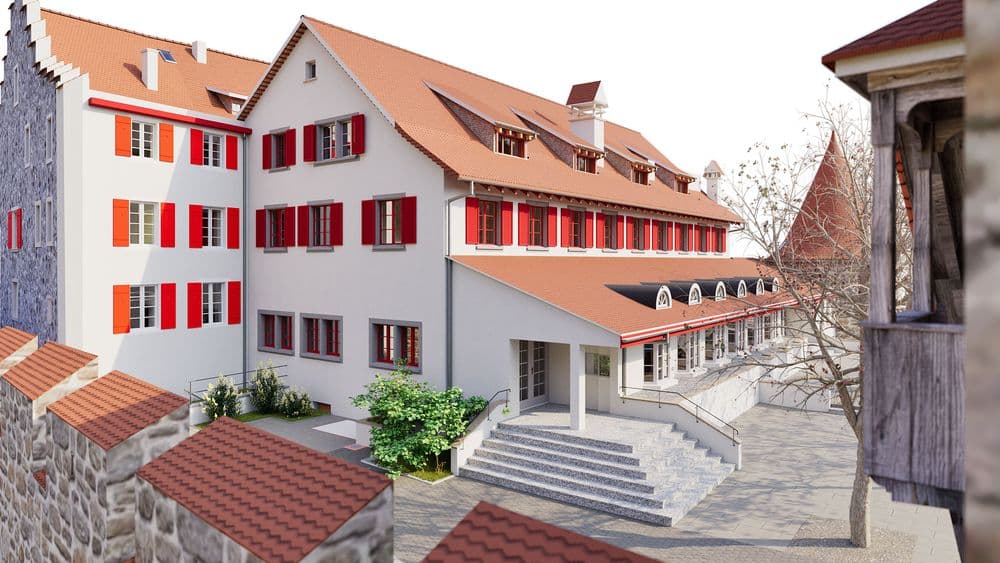
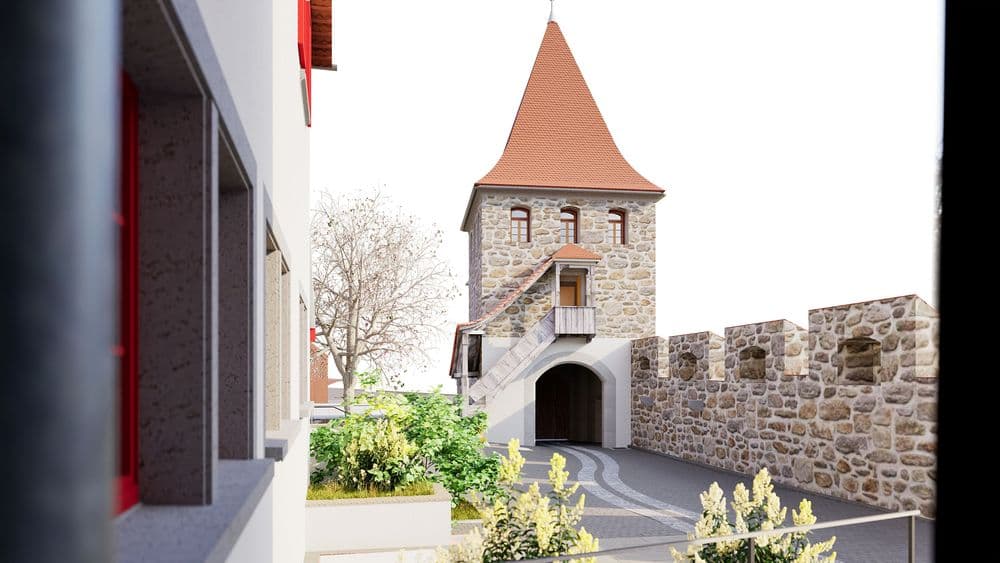
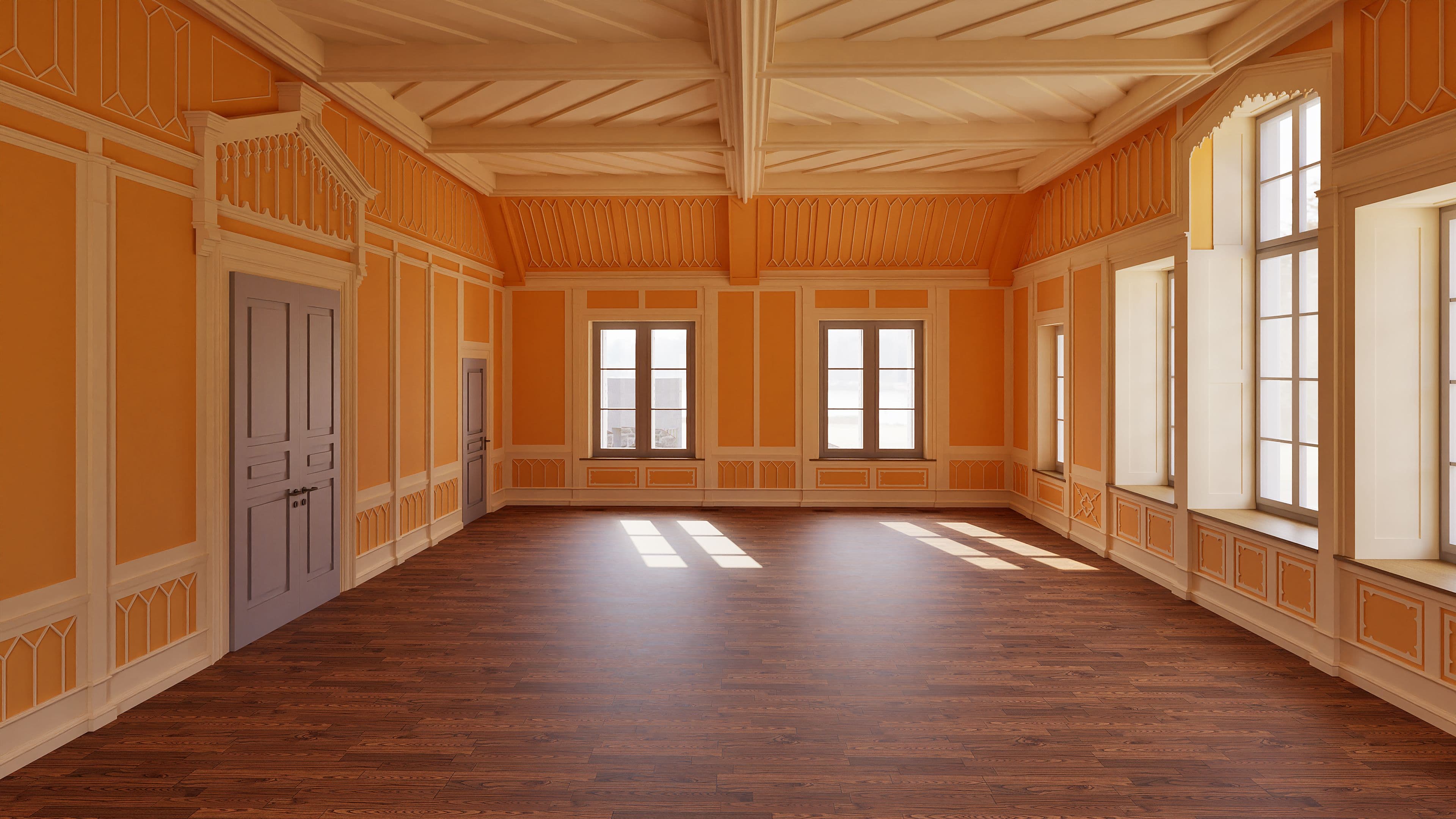
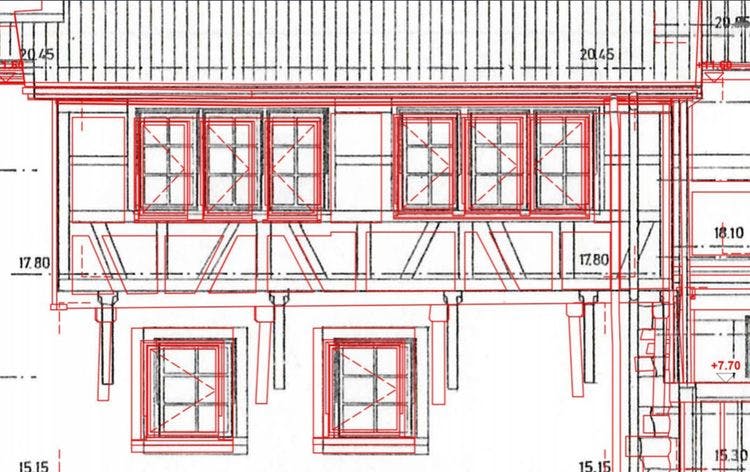
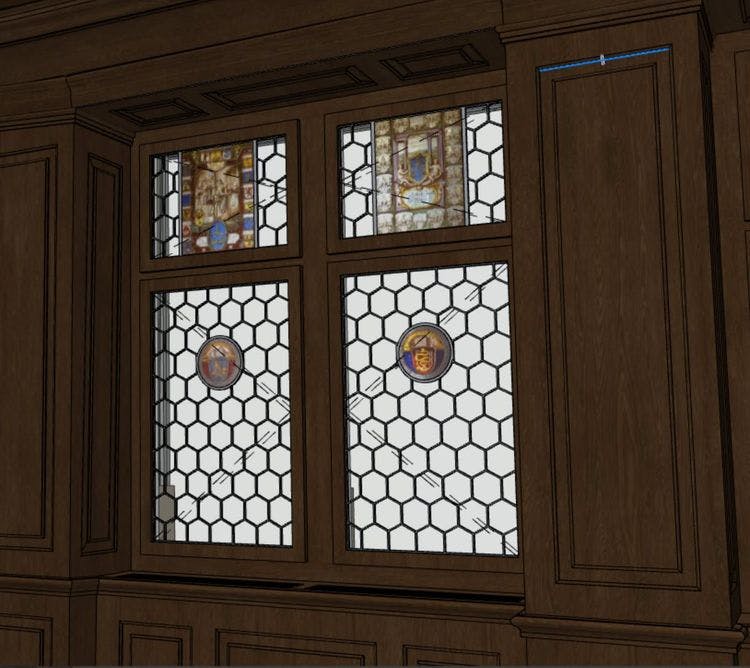
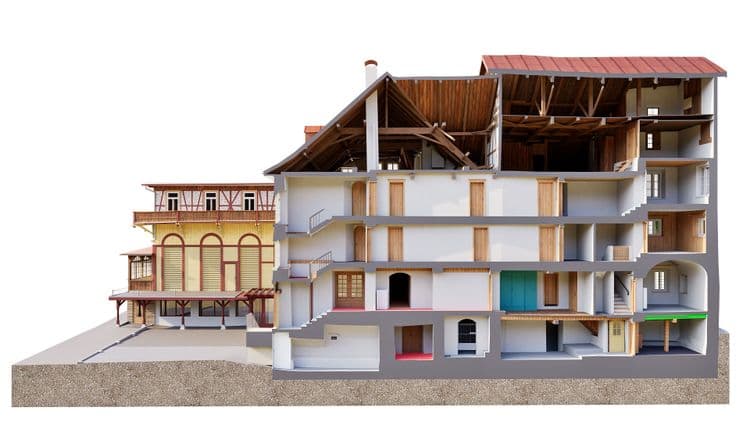
A structured BIM model was derived from the point cloud. Walls, ceilings, vaults, openings and characteristic components were recorded as intelligent BIM elements with geometry, position and attributes - in accordance with the agreed level of detail (LOG/LOD).
4. plan delivery & documentation
As a result, georeferenced 2D plans (floor plans, sections, views) and the complete 3D BIM model were handed over to the client. These documents form a reliable basis for heritage authorities, architects and future planning processes.
Special challenges
Monument surveys in actively operated tourist properties require special care in planning. Schloss Laufen receives visitors on a daily basis - measurement work therefore had to be carried out in time windows with minimal visitor activity without interfering with ongoing operations.
The heterogeneous building fabric from different eras posed further challenges: Gothic wall sections, modern extensions and modern fixtures had to be clearly differentiated and correctly integrated into the model. Irregular geometries - curved vaults, sloping walls, uneven floors - were precisely mapped by the point cloud, which would be almost impossible to achieve using conventional measuring methods.
Added value for monument preservation & planning
The resulting digital model also serves as a basis for restoration projects, as construction documentation for the monument authority, as a basis for future BIM processes - expandable with material data, condition information and COBie attributes - and as a digital twin for communication, planning and archiving.
Conclusion: Modern technology in the service of history
The monument survey of Schloss Laufen am Rheinfall is a prime example of how modern surveying technology and BIM processes can preserve historical substance for future generations. In a building that has been steeped in history for more than twelve centuries, digital documentation creates a bridge between the past and the future.
For our team, this project was not only technically challenging, but also significant in a special way: the opportunity to be involved in one of the most famous cultural monuments in northern Switzerland and to contribute to its preservation with our work is a task that goes far beyond the technical.