Other References
from this Category
Villa Digital
Engineering AG
Tittwiesenstrasse 21
7000 Chur
Alte Landstrasse 248
8708 Männedorf
Zugerstrasse 53
6340 Baar
Neugasse 12
9000 St. Gallen
Survey of Historical Monuments | Lindwurm, Stein am Rhein
Parts of the Lindwurm Museum in Stein am Rhein date back to the 13th century. Over the centuries, people have lived, worked, adapted, and remodeled the space here. Rooms have changed functions, structures have been added, and details have been layered over one another. The building’s current state is the result of many generations—not a single plan.
It is precisely this evolved reality that makes such buildings challenging. Old plans are often incomplete, contradictory, or no longer exist at all. Therefore, clarity is needed first for any future use, restoration, or structural development.
From this point on, we establish a reliable foundation upon which planning can be confidently built.
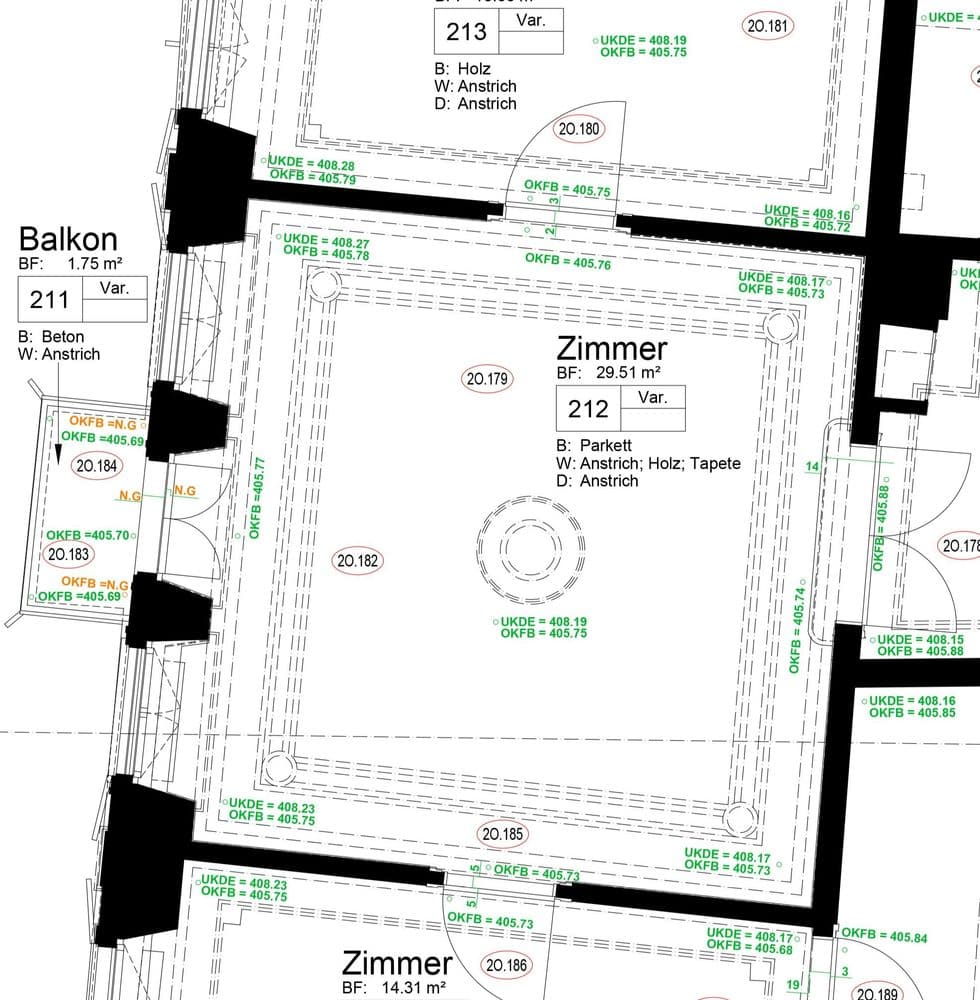
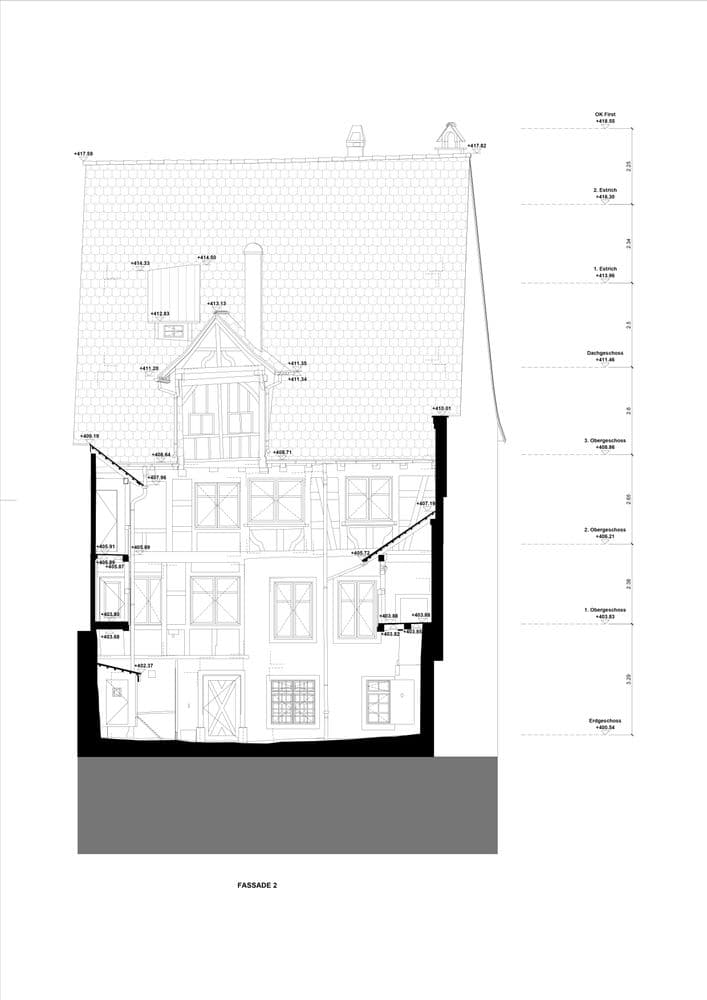
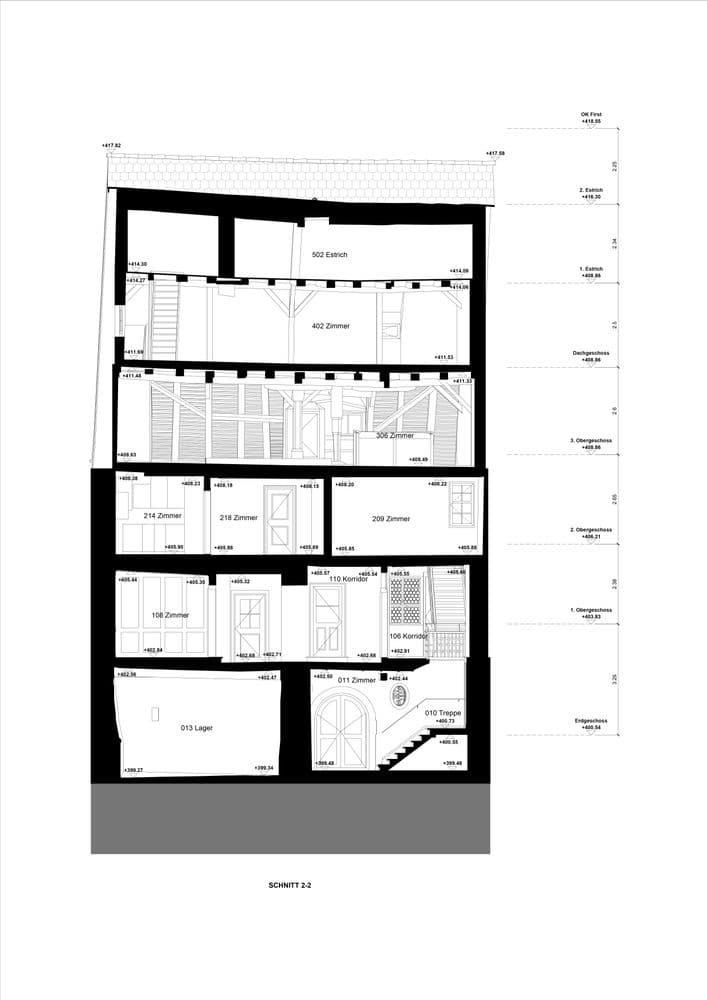
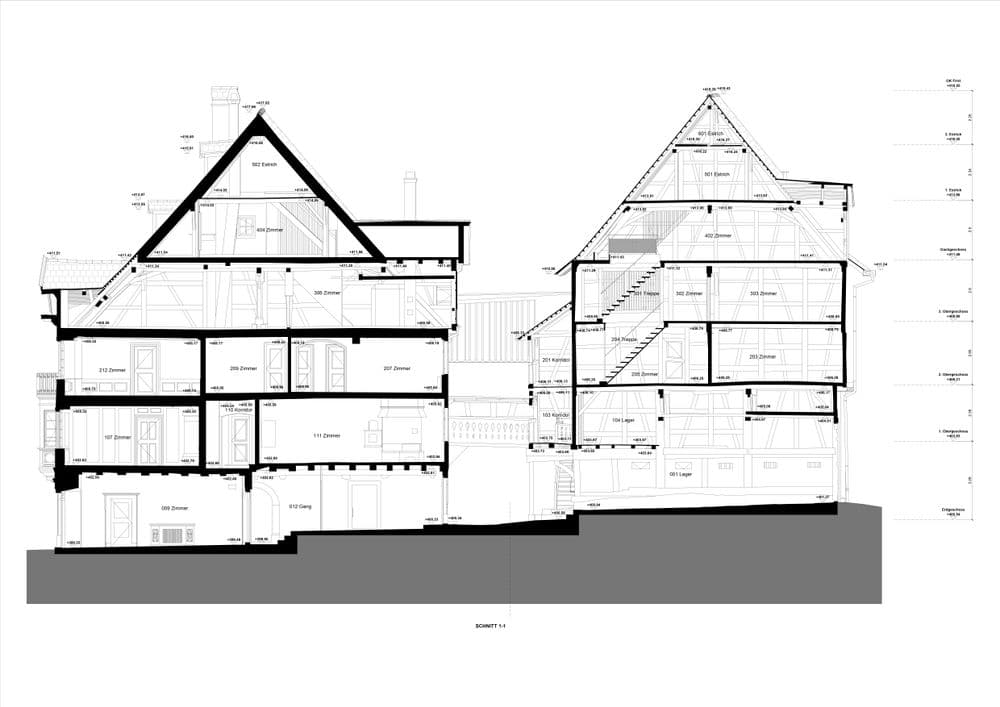
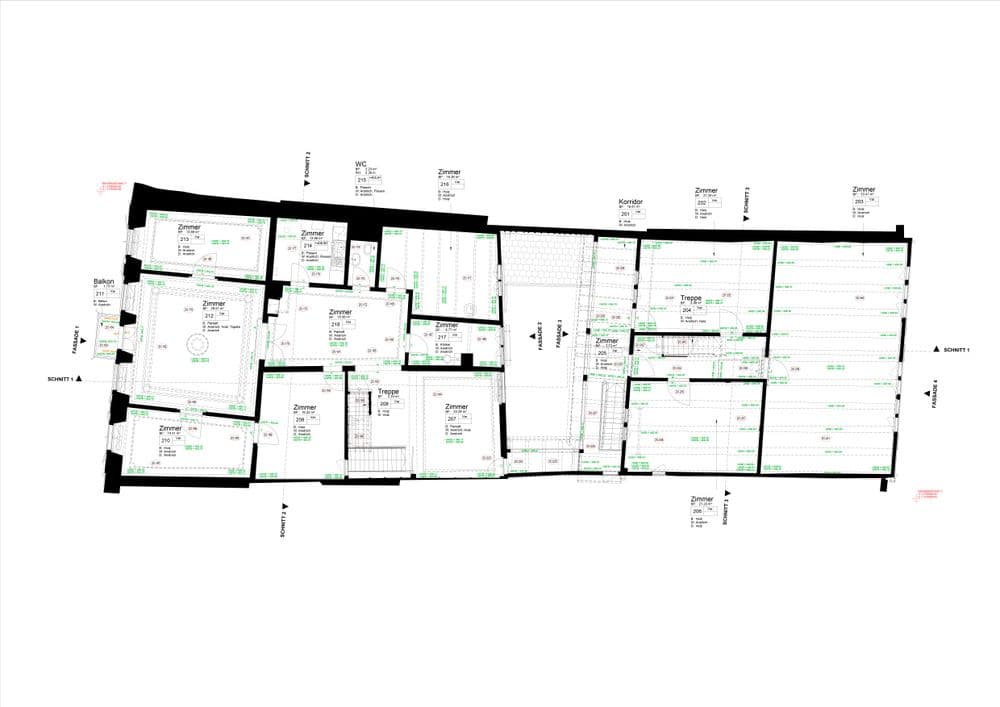
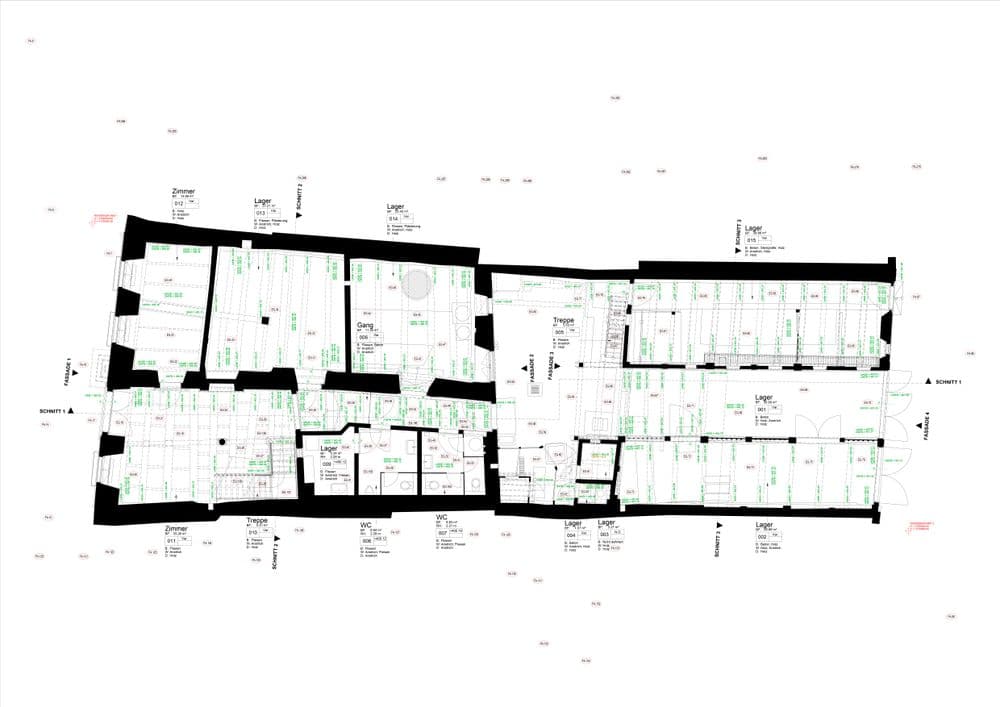
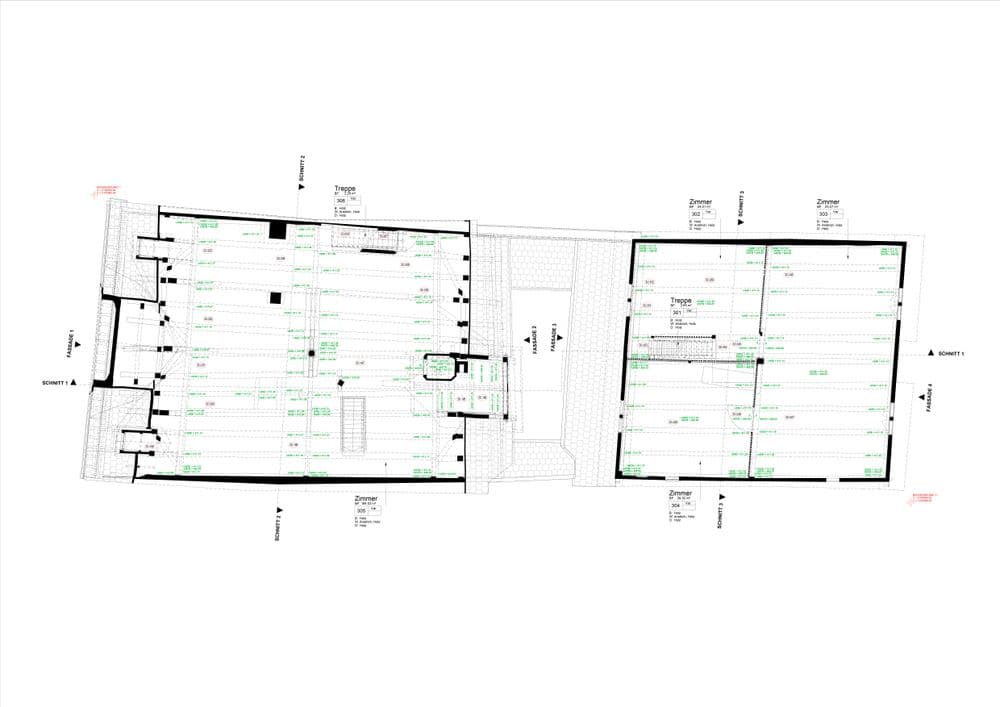
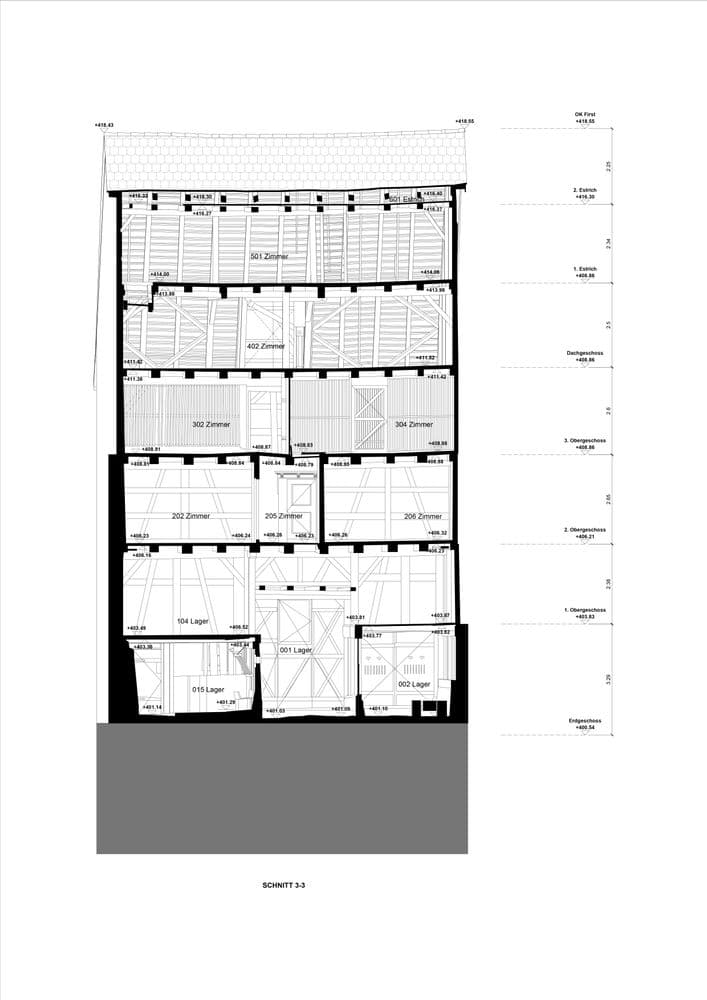
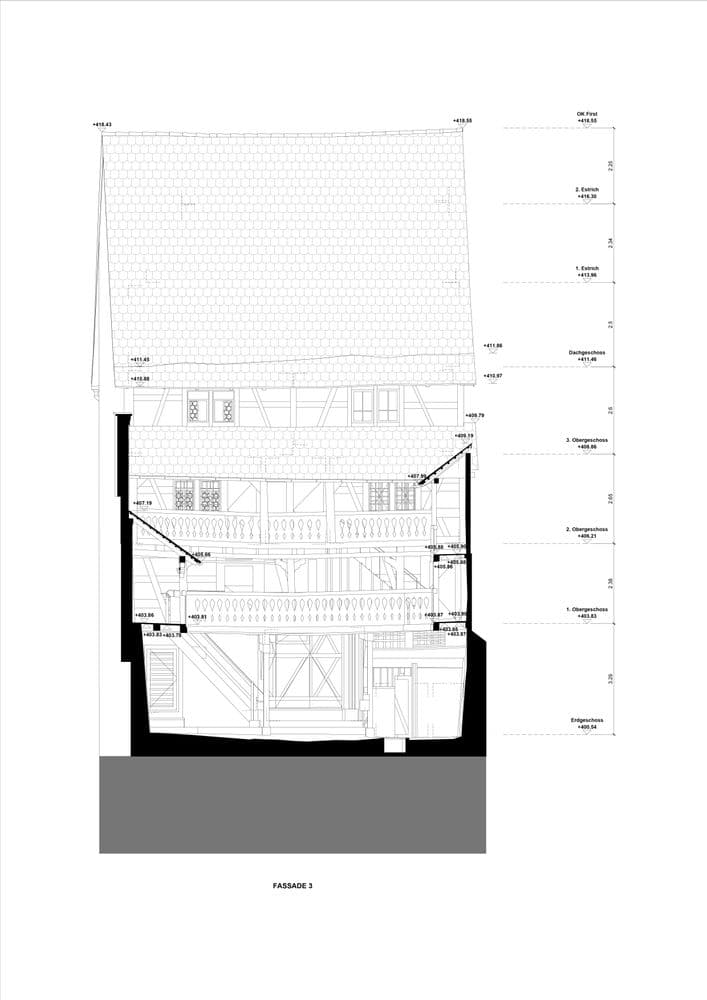
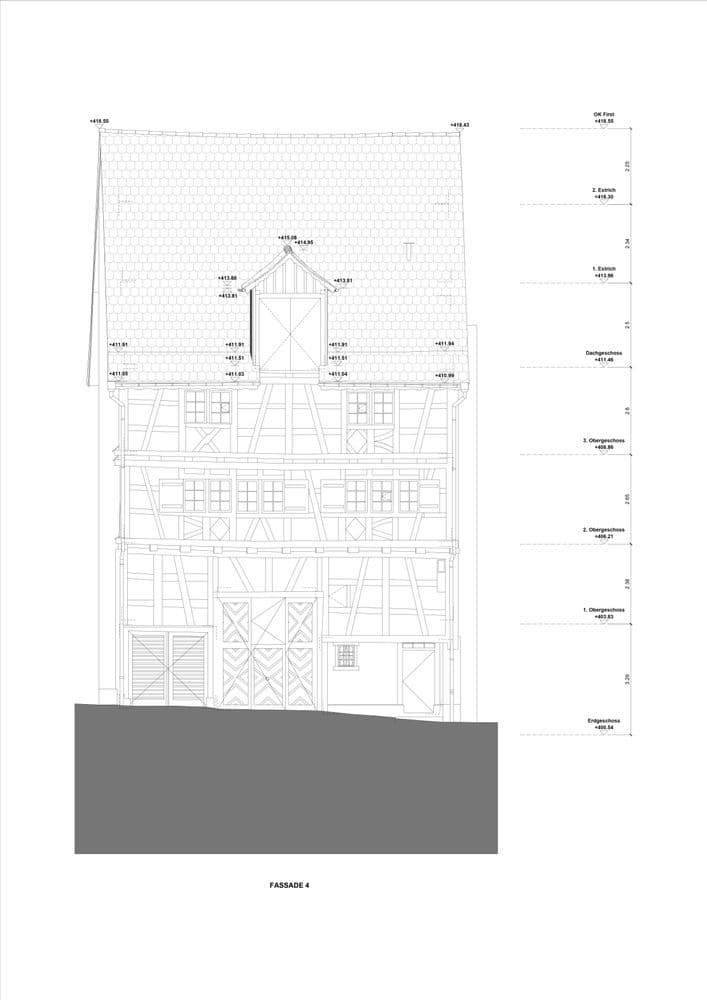
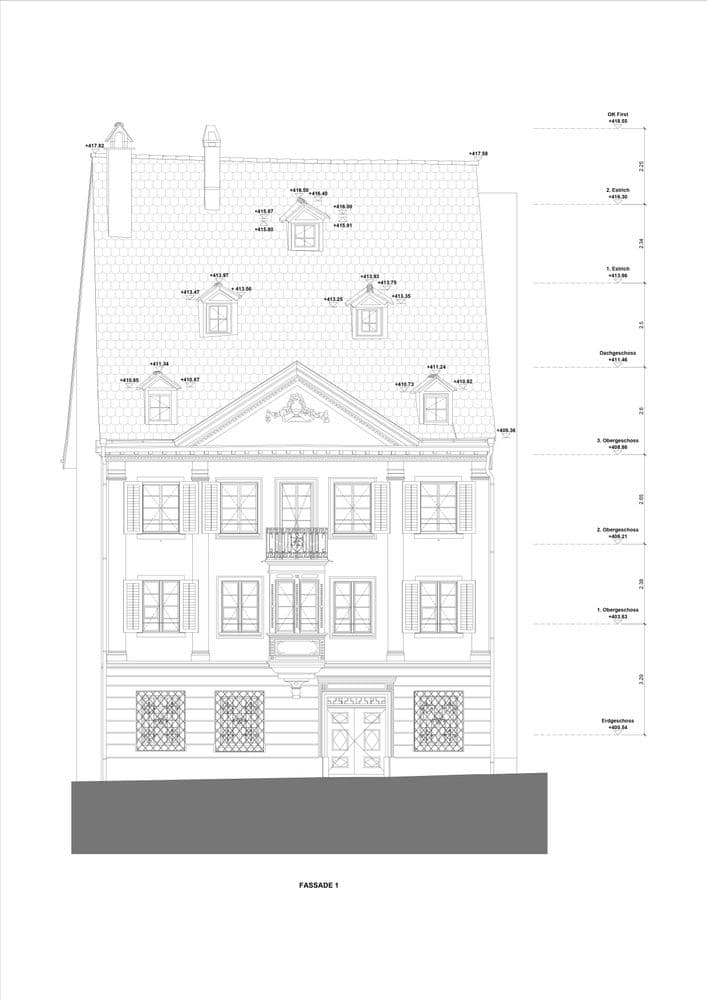
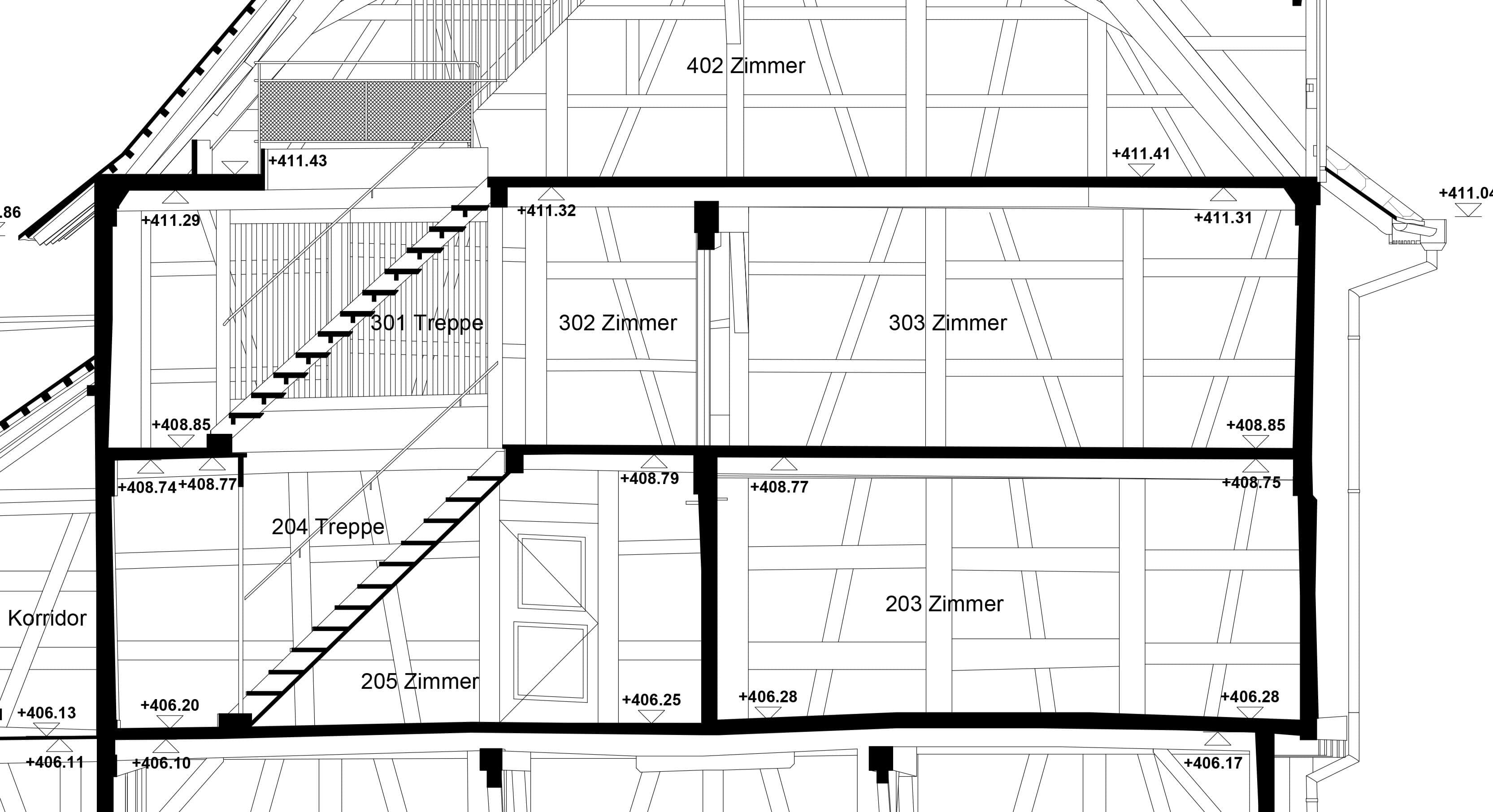
We have precisely surveyed the building using laser scanning and derived clean, traceable 2D plans from the data: floor plans, sections, and elevations that show the existing structure exactly as it is—including its unique features and irregularities.
These plans are neither an interpretation nor an idealized representation. They are an honest assessment of the existing condition and form the basis for well-informed decisions regarding the handling of historic building fabric.
Projects like this demonstrate time and again how important precise building surveying is for existing structures—especially where history, current use, and the future converge.
Parts of the Lindwurm Museum in Stein am Rhein date back to the 13th century. Over the centuries, people have lived, worked, adapted, and remodeled the space here. Rooms have changed functions, structures have been added, and details have been layered over one another. The building’s current state is the result of many generations—not a single plan.